

I remember the first time I bought a stock that everyone said was a loser. The price had dropped hard after some bad news, and my friends thought I was crazy for even looking at it. A couple of years later, that same company turned things around, and the shares more than tripled. That experience taught me something important: the market often gets it wrong in the short term, and there are real ways to find stocks trading below what they are actually worth.
If you are tired of chasing hot stocks only to watch them crash after the hype dies down, learning how to spot undervalued stocks before you buy can change how you invest. It is not about getting rich overnight or following tips from social media. It is about doing the work to find solid companies at prices that give you a margin of safety. In this post, I will walk you through practical steps, real examples, and the thinking process that has helped me and many others avoid expensive mistakes.
What Undervalued Stocks Really Mean
An undervalued stock is one that trades at a price lower than its true worth based on the company’s earnings, assets, growth potential, and cash flow. Think of it like finding a well-built house in a good neighborhood listed for much less than similar homes nearby.
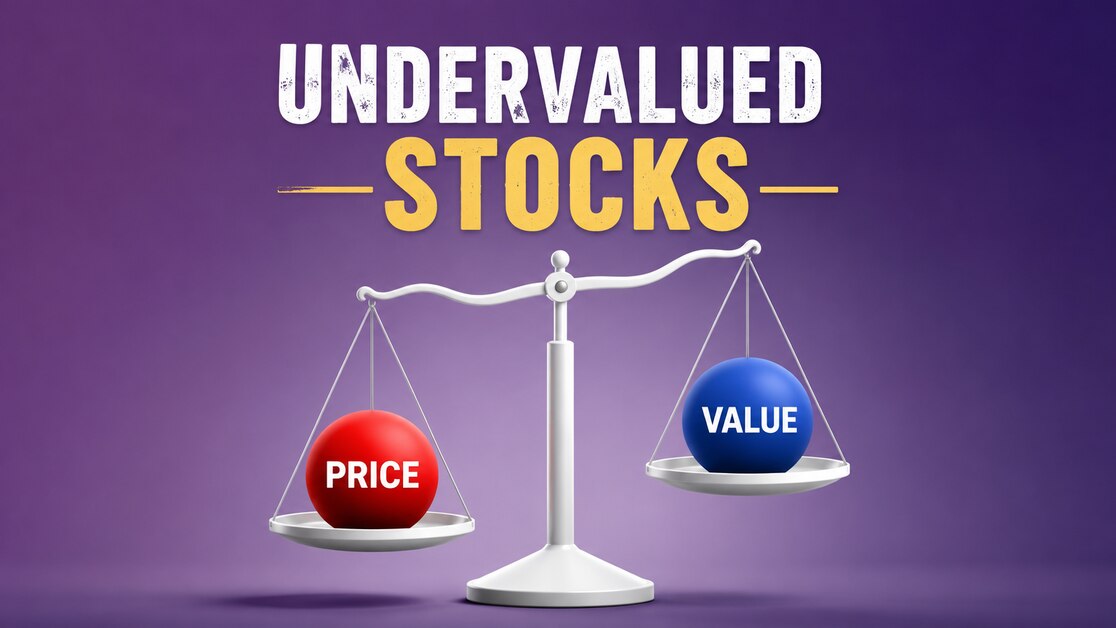
The market price reflects what people are willing to pay right now, influenced by fear, greed, news cycles, and herd behavior. The intrinsic value is what the business is actually worth if you looked at it like a private buyer. When the gap between price and value is wide enough, you have an opportunity.
Why does this matter to you? Because buying at a discount reduces your downside risk and increases the chances of strong returns over time. Many great investors, from Warren Buffett to lesser-known value managers, built their track records by focusing on this difference.
Also Read: 5StarsStocks Cannabis: Best High-Growth Stocks to Buy.
Why Most People Struggle to Find Undervalued Stocks
You have probably felt the frustration. You see a stock mentioned everywhere, buy in, and then it falls further. Or you do some quick research, miss a key detail, and end up holding a company that never recovers.
Common reasons include emotional decisions driven by recent performance, over-reliance on analyst recommendations, and lack of a clear process. During market booms, everyone talks about growth stocks with high valuations. When things turn sour, fear makes people sell good businesses too cheaply. This creates the very opportunities we are looking for.
The good news is that with a repeatable approach, you can train yourself to see past the noise. It takes patience and practice, but the payoff is worth it.
Start with the Basics: Key Financial Ratios for Spotting Value
Numbers do not lie, but you have to know which ones to watch and what they actually mean in context.
Price-to-Earnings Ratio (P/E)
The P/E ratio compares the stock price to the company’s earnings per share. A lower P/E can signal undervaluation, especially when compared to the company’s historical average or similar businesses in the same industry.
For example, if most banks trade at 12 times earnings and one solid bank is at 8 times, it might be worth a closer look. But be careful. A very low P/E could mean the market expects big problems ahead, like declining profits or heavy debt. Always check why the ratio is low.
Price-to-Book Ratio (P/B)
This compares the stock price to the company’s net assets. A P/B below 1 means you are paying less than the book value of the assets. Banks, insurance companies, and manufacturers often get evaluated this way.
I once looked at a regional bank trading at 0.7 times book value during a sector panic. The fundamentals were sound, management was buying shares themselves, and the bad loans were already written down. It recovered nicely over the next few years.
Free Cash Flow Yield
This is one of my favorites because cash is king. Free cash flow yield is free cash flow divided by market capitalization. A high yield relative to peers or the broader market suggests the company generates plenty of cash compared to its price.
Look for companies that consistently produce more cash than they need for operations and growth. That extra cash can fund dividends, buybacks, debt reduction, or new opportunities.
Dividend Yield and Payout Ratio
A healthy dividend yield combined with a sustainable payout ratio (dividends as a percentage of earnings) can point to undervaluation. If a stable company yields 4-6% and has a payout ratio under 60%, it often means the market is not fully appreciating its stability.
But watch out for very high yields above 8-10% on non-special situations, as they can signal trouble.
Also Read: 5starsstocks.com Dividend Stocks: Valuable Income Stocks.
Dig Deeper: Qualitative Factors That Matter
Numbers alone are not enough. You need to understand the business behind them.
Competitive Moat
Does the company have something that protects it from competitors? This could be a strong brand, network effects, cost advantages, or regulatory barriers. Companies with durable moats tend to maintain profitability even when times get tough.
Management Quality
Look at how executives allocate capital. Do they buy back shares when the stock is cheap? Do they avoid overpaying for acquisitions? Have they been honest during difficult periods? Insider buying by executives and directors is often a positive signal.
Industry and Macro Trends
Sometimes entire sectors get beaten down unfairly. Energy, financials, or retail have all had periods where good companies were sold off indiscriminately. If you understand the long-term drivers of an industry, you can separate temporary problems from permanent ones.
Also Read: 5StarsStocks.com to Buy: Best Picks for Massive Returns.
How to Analyze a Company Step by Step
Here is a practical process I use when evaluating potential undervalued stocks.
- Screen for Candidates Use free tools like Finviz, Yahoo Finance, or your broker’s screener. Filter for low P/E, low P/B, positive earnings growth, and reasonable debt levels. Start with a manageable list of 20-30 names.
- Read the Financial Statements Go through the last few years of 10-K and 10-Q filings. Pay special attention to the balance sheet for debt and cash, the income statement for trends in revenue and margins, and the cash flow statement for actual cash generation.
- Assess Risks What could go wrong? Lawsuits, regulatory changes, technological disruption, or high customer concentration? Write down the main risks and decide if the potential reward justifies them.
- Estimate Fair Value Use simple methods like discounted cash flow (even a basic one), multiples from comparable companies, or sum-of-the-parts valuation. You do not need perfection. You just need a reasonable range where the current price is clearly below.
- Check Technicals for Timing While I am primarily a fundamental investor, I look at price charts to avoid buying right before a potential breakdown. Support levels, moving averages, and relative strength can provide additional context.
Real-World Examples of Undervalued Opportunities
Let me share a few cases without naming specific tickers that might be current recommendations.
During the 2020 pandemic crash, many travel and leisure companies traded at fractions of their pre-crisis values. One major airline with a strong balance sheet and loyal customer base was trading at less than the value of its aircraft and cash holdings. Investors who did the homework and had the courage to buy during maximum fear did very well as travel recovered.
Another example comes from the banking sector after the financial crisis. Several regional banks with clean loan books were available at deep discounts to book value. The ones with conservative management and strong local franchises rewarded patient shareholders handsomely.
These stories are not about luck. They came from systematic analysis during times when fear dominated the headlines.
Also Read: 5StarsStocks.com Healthcare: Smart Picks for Strong Growth.
Tools and Resources That Actually Help
You do not need expensive subscriptions to get started.
- Free financial websites for data and filings
- Annual reports and earnings call transcripts
- Industry-specific resources and trade publications
- Books like “The Intelligent Investor” or “Margin of Safety” for deeper thinking
- Simple spreadsheet models to track your own valuations
I keep a watchlist in a basic spreadsheet where I note key ratios, fair value estimates, and reasons for interest. Reviewing it regularly helps me stay disciplined.
Common Mistakes That Cost Investors Money
Even with good methods, it is easy to slip up.
- Ignoring the Balance Sheet A cheap-looking stock with massive hidden debt can destroy value quickly.
- Buying Too Early Sometimes stocks stay cheap for a long time. Make sure you have conviction and position size accordingly.
- Lack of Diversification Even the best value ideas can take time to work out. Spread your bets across different sectors and situations.
- Emotional Selling When the price drops after you buy, revisit your original thesis instead of panicking.
- Chasing Apparent Value Without Understanding the Business If you cannot explain in simple terms why the company should be worth more, it is probably not a good candidate.
Also Read: 5StarsStocks.com AI: Huge Mistakes Wasting Your Money.
Building Your Own Process for Finding Undervalued Stocks
The key is consistency. Set aside time each week to review your watchlist and research new ideas. Start small with companies you already understand from your daily life—retail, consumer goods, or technology you use.
Join communities of serious investors (not hype groups) where you can discuss ideas and learn different perspectives. Over time, you will develop better judgment.
Remember that spotting undervalued stocks is as much about psychology as it is about finance. You need the ability to go against the crowd when the data supports it.
Risk Management and Position Sizing
Never put more money into a single idea than you can afford to lose if things go wrong. I generally keep individual positions under 5-10% of my portfolio depending on conviction and risk level.
Have a plan for when to sell. This could be when the stock reaches your fair value target, if the fundamental story changes negatively, or after a set period if the thesis is not playing out.
Also Read: 5StarsStocks.com Income Stocks: Best Picks for Income.
Final Thoughts on Spotting Undervalued Stocks
Learning how to spot undervalued stocks before you buy takes time and effort, but it is one of the most rewarding skills in investing. It shifts your mindset from following trends to thinking like a business owner looking for good deals.
Start by applying these ideas to just a few companies. Read their reports, run the numbers, and form your own opinions. You will make mistakes along the way—that is part of the process—but each one will make you sharper.
The market will always have periods of irrational optimism and pessimism. Those who stay disciplined and focus on value can use these swings to their advantage.
What do you think? Have you found any interesting stocks that seem undervalued lately? Share your experiences in the comments—I read them and often learn something new from fellow investors.
For more useful articles, visit my website: 5StarsStocks.org.
Disclaimer: This article is for educational and informational purposes only. It is not investment advice. Always do your own research and consider consulting a qualified financial advisor before making investment decisions. Past performance does not guarantee future results.